
Top 6 most important mountains in Gran Canaria
There is a wide variety of activities that you can do in Gran Canaria regardless of your interests. But if you consider yourself an adventurer or if you are simply a mountain lover, Gran Canaria offers you exactly what you are looking for. Not many people know that the tallest mountain in Spain is located in the Canary Islands. Are you interested? We have made a list in order to help you deciding which mountain you should visit during your trip to the Canary Islands.
Pico de las Nieves
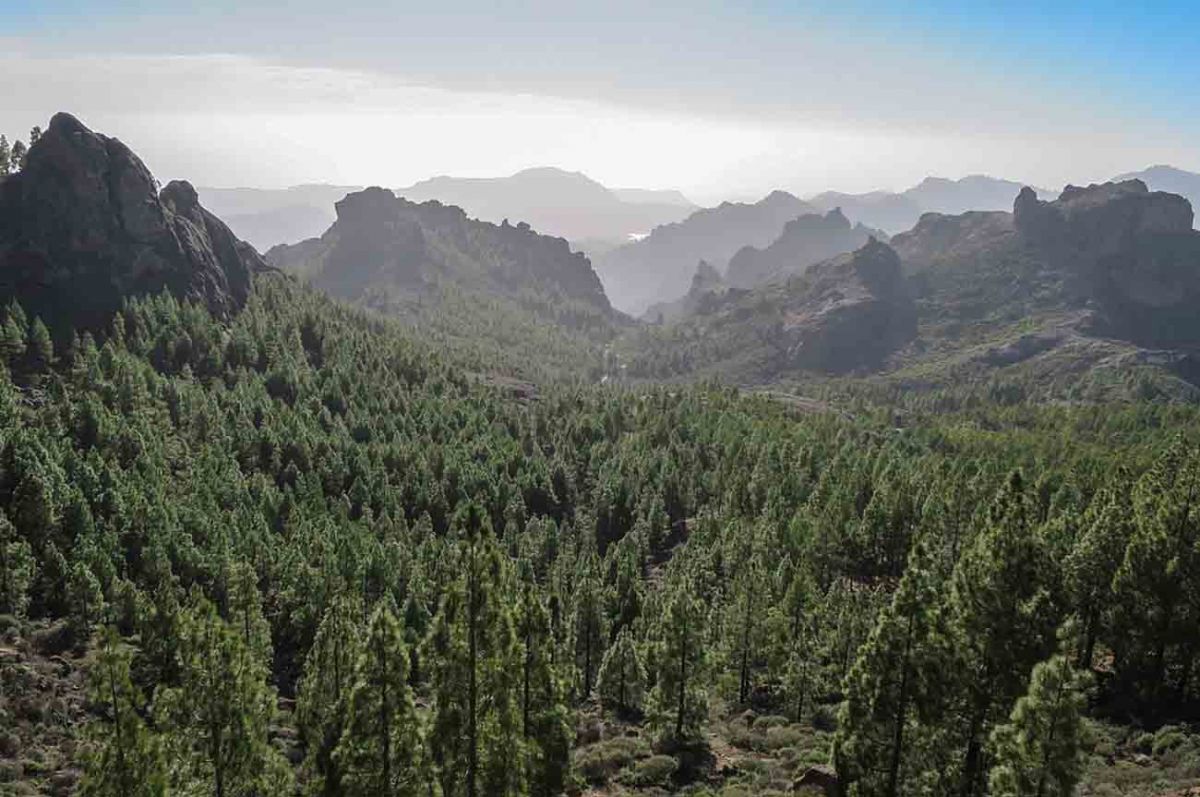
Pico de las Nieves ~~the~~ is the highest elevation in the province of Las Palmas, the second highest peak of the island of Gran Canaria, and the third highest mountain in the Canary Islands. Its height is 1,949 meters above the sea level. Pico de las Nieves' origin is volcanic, so it is a stratovolcano. Canary Islands Pine Tree was reintroduced in the 1950s on its slopes.
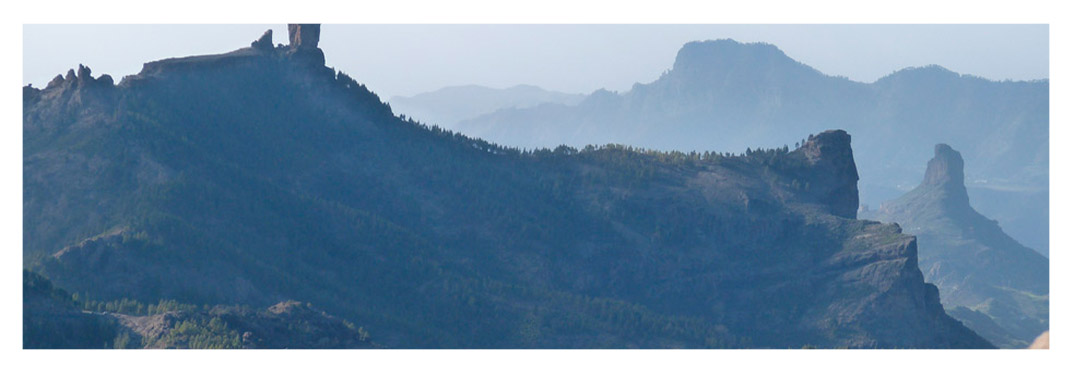
To appreciate the essence of a place and soak up its atmosphere there is nothing better than getting to its highest point and enjoy the views. Those stunning views with innumerable deep valleys and jagged ridges shrouded with vegetation and crowned with spectacular rocks. A place where you can enjoy the sunset over a sea of clouds. Unlike other lookout points, Pico de las Nieves has great views on cloudy days as you get to see Gran Canaria’s peaks and Tenerife floating on that amazing sea of clouds. The spectacle is undoubtedly well worth it!
Montaña de Aguimes
Montaña de Agüimes, or Aguimes Mountain, is located in the surrounding area of Agüimes, a historic town in the eastern part of the island of Gran Canaria in Las Palmas province, at the Canary Islands. Aguimes Mountain is a wonderful natural scenery, furthermore, it is a protected area. It is one of the most interesting places for visitors, as it holds archaeological remains where native cave drawings can still be seen, as well as cave dwellings.
The most important site is Morro del Cuervo, with its unique collection of petroglyphs.
Roque Bentayga
Roque Bentayga, as well known as the pillars of the sky, is located in Gran Canaria. Roque Bentayga is one of the most fascinating and mysterious Gran Canarian landmarks. Its story begins million years back when Gran Canaria was rising from the ocean’s waters due to volcanic activity.
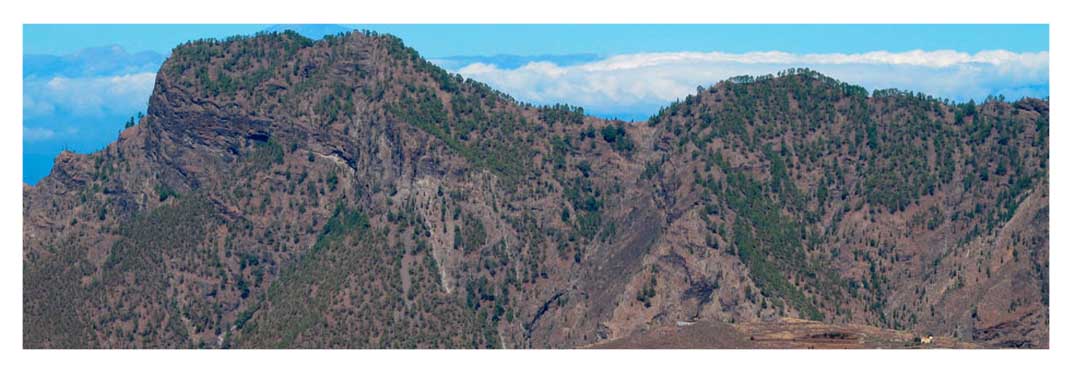
Roque Bentayga is the result of millennia of constant erosion that started the moment the island was formed. It is a former volcanic plug, part of Caldera de Tejeda, made from basalt. Due to its solidity is still standing even though the surrounding softer materials were washed away by the rainfalls and rockslides. A stand-alone rock which is indubitably the focal point of a huge erosion crater.
This majestic rock that dominates the valley having its past shrouded in mystery, and it has not revealed its secrets yet. Do you want to discover the secrets hidden in Roque Bentayga?
Morro de la Agujereada
Morro de la Agujereada is a mountain located in Gran Canaria. In fact, it is placed right next to Pico de las Nieves. And there is a very curious fact about this mountain; Morro de la Agujereada has grown 6 meters tall, getting a height of 1956 meters high. Due to this, it has recently become the highest peak in Las Palmas province, in Gran Canaria. Although now that it is officially higher than Pico de las Nieves, some people do not agree with that fact. Scientists and historians are trying to reach an agreement to get to know how to classify both of them. One thing is for sure, Morro de la Agujereada is worthwhile to visit.
Roque Nublo
Roque Nublo is a volcanic rock located in Gran Canaria. The geographical landmark of Roque Nublo is a near ninety-meter-high monolith and it is a proud memento from a dim and distant past. It has inspired painters, writers, and composers, and has appeared in a multitude of works.
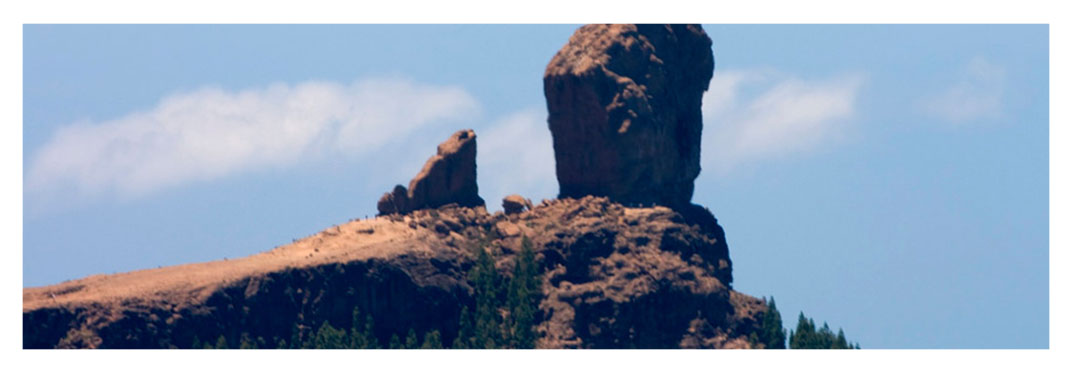
Roque Nublo is the result of the hardening off burning clouds following its formation and latter cooling off. Its uniqueness has led to the second great volcanic cycle in Gran Canaria being named after it, the Roque Nublo cycle, covering a period of nearly two million years (from 5.3 to 3.4 million years to the present day).
Roque Nublo has always been a focal point for Canarian pilgrims and it is a profound sentimental manifestation of those who belong to this island’s deep-rooted culture. Roque Nublo also represents a goal for numerous mountaineers since a German team climbed its summit for the first time back in 1932.
It is also surrounded by the Nublo Rural Park and it has been singled out as a Natural Monument.
The surrounding vegetation is a recently replanted pine wood which sits alongside brush and scrubland typical of the Gran Canarian peaks, such as scotch broom and sage.
There are a lot of things to do and see in Gran Canaria, that is the reason why sometimes it can be quite complicated to choose what to see first. If you have any doubt, please, do not hesitate to contact usfor further information anytime!
Did you like this article? Share it!